
Exploring Blackjack Variants and Side Bets: Calculating the Real House Edge
You sit down at the blackjack table, ready to play a game of skill and chance. The basic strategy is in your head, you’re feeling sharp. But then you see them—the flashy side bet options on the felt, or maybe the dealer mentions this table is playing a “fun” variant like “Blackjack Switch.” The allure is real. A chance for a huge payout on a single dollar? Or a rule that seems to tilt the odds in your favor? It’s tempting.
Here’s the deal, though. That temptation is precisely what the casino banks on. While the standard game offers one of the lowest house edges in the joint, these add-ons and rule twists are a different beast entirely. To make smart decisions with your bankroll, you need to peek behind the curtain. Let’s dive into the math and psychology of blackjack variants and side bets, and figure out how to calculate their real cost.
The Foundation: House Edge in Classic Blackjack
First, a quick baseline. In a common 6-deck game with decent rules (dealer stands on soft 17, double after split allowed, etc.), a perfect basic strategy player faces a house edge of around 0.5%. That means for every $100 you bet, you’re expected to lose about 50 cents in the long run. It’s a grind, but it’s a fair fight. This number isn’t static, though—it’s a delicate balance altered by every rule change.
Popular Variants and Their Hidden Tax
Variants tweak the core rules to create a “new” game. The problem? The tweaks almost always favor the house. You have to weigh the novel benefits against the mathematical adjustments.
Blackjack Switch
You play two hands and can swap the top cards between them. Sounds powerful, right? It is. But to compensate, the casino typically pays blackjack at even money (instead of 3:2) and sometimes a dealer 22 pushes against player 21. That “push on 22” rule alone is a monster—it adds roughly 6% to the house edge. Even with perfect switching strategy, the game’s edge often sits above 0.5%, sometimes closer to 0.7%. The gimmick gives, but the rules take away.
Spanish 21
This one is a player favorite because of its liberal rules: double down anytime, late surrender, and bonus payouts for certain 21s. But the deck is stacked—literally. All the 10s are removed (though face cards remain), creating a “Spanish Deck.” Removing those 10s is a catastrophic blow to the player’s natural blackjack frequency and good drawing odds. Despite the friendly rules, the house edge can be similar to or even higher than a bad classic blackjack game, often in the 0.4% to 0.8% range with perfect play. A classic case of “looks too good to be true.”
Double Exposure
The dealer’s cards are both face-up. Total information! What’s the catch? Well, several: ties lose (except blackjack), blackjack pays even money, and you can’t usually surrender. Knowing the dealer’s hand is huge, but these rules are brutal. The house edge often skyrockets to 1.5% or more. Transparency, it turns out, comes with a steep price.
The Siren Song of Side Bets
Side bets are separate wagers on specific card outcomes, resolved before the main hand. They’re seductive. A tiny bet can win you 50-to-1, 100-to-1, even 1000-to-1! But let’s be honest—they’re lottery tickets with a terrible expected value.
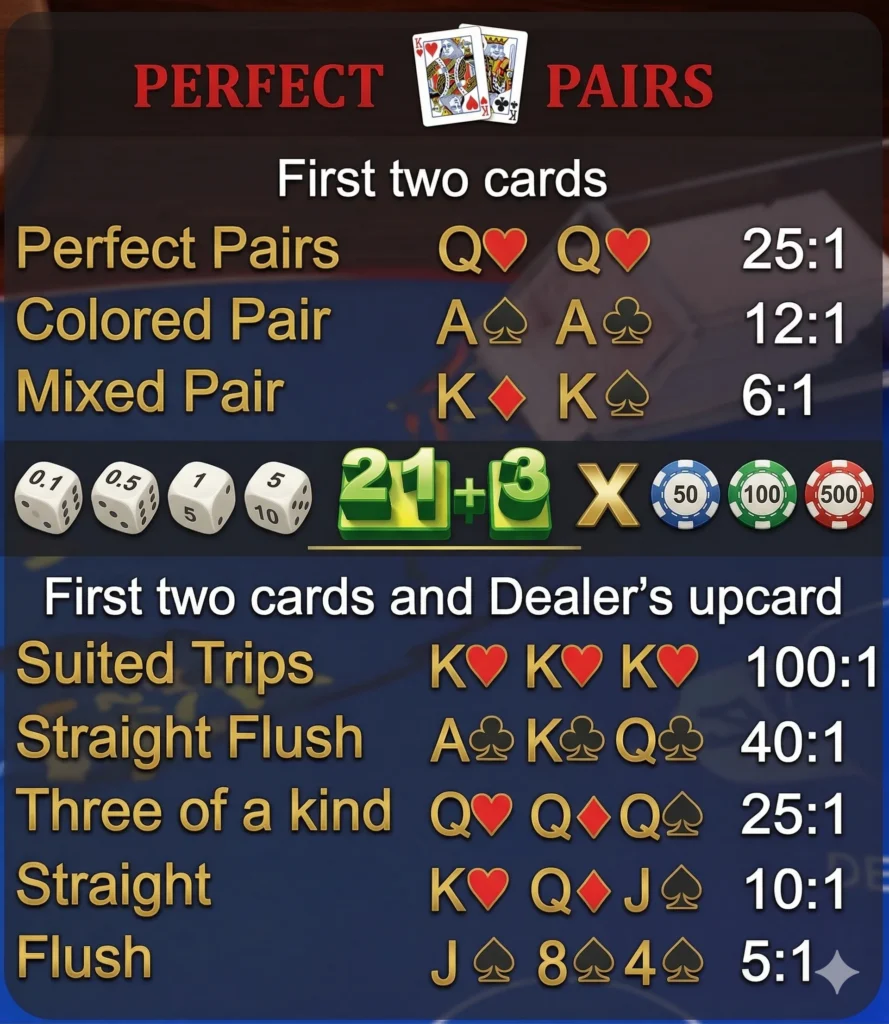
Calculating their edge is about understanding probability. Take the common “Perfect Pairs” bet. You’re betting your first two cards will be a pair. The payout depends on the pair type (mixed, colored, perfect). The probability of a perfect pair (same rank and suit) in a 6-deck game is tiny—about 0.32%. The high payout lures you in, but the math grinds that hope to dust. The house edge on Perfect Pairs is typically a whopping 4-6%.
Or consider “21+3,” which combines your first two cards and the dealer’s up card to make a poker hand. The odds of getting a flush or straight are low; the odds of a three-of-a-kind are minuscule. Again, the edge is massive, usually between 3% and 7%. You’re paying a huge tax for that dream of a big score.
| Side Bet | Typical House Edge | Why It’s So High |
| Perfect Pairs | 4% – 6% | Extremely low probability of top payouts. |
| 21+3 | 3% – 7% | Poker hand odds are poor with only 3 cards. |
| Insurance | ~7% (on the side bet) | A sucker bet unless you’re counting cards. |
| Lucky Ladies | 10%+ (can vary) | Betting on a specific, very rare total. |
How to Think About the “Real” Edge in Your Session
Okay, so the numbers are grim. What does this mean for you at the table? The real house edge you face is a weighted average of everything you wager on. Imagine you play perfect basic strategy on a 0.5% edge main game, but you toss a $1 side bet on every $10 main bet. If that side bet has a 5% edge, you’re diluting your overall position.
Your combined edge becomes a blend of the two. In fact, you’re effectively paying a much higher tax on your total action. For many recreational players, that side bet is the only reason the casino makes a solid profit from their visit. It’s the hidden engine of the game’s profitability.
A Final, Simple Rule of Thumb
Look, variants can be fun for a change of pace—just know you’re likely paying for that entertainment with slightly worse odds. But side bets? They’re almost pure profit for the house. Think of them like the colorful sprinkles on a cupcake: they add no nutritional value (and cost extra), but they make the treat look more exciting.
The most powerful tool you have isn’t a complicated calculation at the table. It’s a simple mindset. View every variant rule and every side bet box with healthy skepticism. The math is deliberately opaque, designed to appeal to your gut, not your brain. Your bankroll isn’t just fighting chance; it’s fighting clever design. And knowing that is the first step to playing on your own terms.