

Low-Limit Blackjack Strategy for Recreational Players
Let’s be real for a second. You’re not counting cards. You’re not memorizing every deviation from basic strategy. You’re here to have fun, maybe win a few bucks, and definitely not blow your beer money. That’s exactly who this low-limit blackjack strategy is for — the recreational player. The one who sits down at a $5 or $10 table, gets a drink, and wants to feel like they’ve got a fighting chance. Honestly, you do. You just need a little structure.
Why Low-Limit Tables Are a Different Beast
Low-limit blackjack isn’t just cheaper — it’s a different game. The rules are often worse. You might see a 6:5 payout for blackjack instead of the standard 3:2. The dealer might hit on soft 17. And the shoe? It’s usually a six-deck or eight-deck monster. That’s fine. You’re not trying to beat the house long-term. You’re trying to stretch your bankroll and enjoy the ride.
Here’s the deal: the house edge at a low-limit table can be anywhere from 0.5% to over 2%. That’s a big swing. Your job is to minimize that edge — without turning the game into a math exam. Sound good? Let’s dive in.
First Things First: Find a Decent Table
Not all low-limit tables are created equal. Walk past the ones that scream “6:5 Blackjack!” like it’s a deal. It’s not. That rule alone adds about 1.4% to the house edge. Ouch. Look for a 3:2 table — even if it’s a $10 minimum instead of $5. Your wallet will thank you. Also, check if the dealer stands on soft 17. That’s a small win for you.
Sure, you might have to hunt a bit. But finding a table with decent rules is like finding a clean bathroom in a casino — rare, but worth the effort.
The Core Strategy: Basic, But Not Boring
You’ve heard of basic strategy, right? It’s that chart that tells you when to hit, stand, double down, or split. It’s not sexy. But it’s your best friend at a low-limit table. Without it, you’re basically gambling — with the odds stacked against you. With it, you’re playing smart.
Here’s the thing — you don’t need to memorize the whole chart. Focus on the most common situations. Let’s break it down into bite-sized chunks.
When to Hit and When to Stand
This is the bread and butter. A good rule of thumb: if you have 12 to 16 and the dealer shows a 7 or higher, hit. You’re probably going to bust, but the dealer probably has a pat hand. If the dealer shows a 2 through 6, stand on 12 or higher. Let them bust. It’s a little counterintuitive, but it works.
And for the love of chips — never stand on a soft 17 (Ace + 6). Hit it. Always. You can’t bust with a soft hand, and you might improve.
Doubling Down: Your Secret Weapon
Doubling down is where recreational players get nervous. Don’t be. It’s a powerful move — you double your bet for one more card. Do it when you have 11 and the dealer shows anything except an Ace. Also, double on 10 against a dealer’s 2 through 9. And here’s a sneaky one: double on soft 13 through 16 (Ace + 2 through 5) against a dealer’s 5 or 6. It feels risky, but the math loves it.
At a $5 table, doubling down means you’re risking $10. That’s a burger and fries. Go for it.
Splitting Pairs: Don’t Be a Hero
Split Aces and 8s. Always. Never split 10s or 5s. Splitting 10s is a rookie move — you’re breaking up a 20. Splitting 5s? Just double down instead. For other pairs, use common sense. Split 2s and 3s against a dealer’s 4 through 7. Split 6s against a 3 through 6. Split 7s against a 2 through 7. And split 9s against a 2 through 6, but not against a 7 (stand) or 10 (stand).
Yeah, it’s a lot. But you can cheat — keep a small chart on your phone. No one cares.
Bankroll Management: The Real MVP
Here’s where most recreational players trip up. They sit down with $50, lose a few hands, then chase losses. Bad idea. Instead, treat your bankroll like a night out. Decide how much you’re willing to lose — and stick to it.
For low-limit blackjack, a good rule is to bring 20 to 30 times the minimum bet. So for a $5 table, that’s $100 to $150. For a $10 table, $200 to $300. That gives you enough hands to weather the storm. And if you double your money? Walk away. Seriously. You’re not a pro. You’re a recreational player who just had a great session.
Think of it like this: blackjack is a roller coaster. You’re here for the ride, not to own the park.
Side Bets: The Trap You Should Avoid
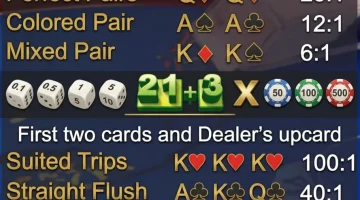
You’ll see them — “Perfect Pairs,” “21+3,” “Lucky Ladies.” They look fun. They pay big. And they’re terrible for your bankroll. The house edge on side bets is often 10% or higher. That’s like playing a slot machine with worse odds. Skip them. Put that dollar into your main bet instead.
Sure, you might hit a pair of Aces and win 25:1. But the odds of that are… well, not great. Stick to the main game. It’s already hard enough.
Playing the Player Next to You
Low-limit tables are social. You’ll get advice from the guy in the Hawaiian shirt who’s had three Mai Tais. He’ll tell you to “never split 8s” or “always hit 12.” Ignore him. Politely. Just say, “I’m playing my own game,” and smile. You’re not being rude — you’re being smart.
That said, enjoy the banter. It’s part of the fun. Just don’t let it mess with your decisions. You’ve got a strategy now.
A Quick Reference Table for Key Hands
| Your Hand | Dealer Upcard | Action |
|---|---|---|
| 11 | 2–10 (not Ace) | Double down |
| 10 | 2–9 | Double down |
| Soft 13–16 | 5–6 | Double down |
| 12–16 | 7 or higher | Hit |
| 12–16 | 2–6 | Stand |
| Aces | Any | Split |
| 8s | Any | Split |
| 10s | Any | Stand (never split) |
Print this out. Or screenshot it. It’s your cheat sheet.
When to Walk Away (and When to Stay)
This is the hardest part. You’re on a hot streak. Cards are falling your way. The dealer busts like clockwork. But then… the shoe turns. You lose a few hands. Then a few more. Suddenly, you’re down. Here’s the trick: set a loss limit. For example, if you’re down 50% of your bankroll, walk. No exceptions. And if you’re up 50%? Walk. Seriously. The casino will be there tomorrow.
I know — it’s hard to leave when you’re winning. But the house always has an edge. The longer you play, the more likely you are to give it back. So cash out, grab a coffee, and feel like a winner.
Final Thoughts: Play Your Game
Low-limit blackjack isn’t about getting rich. It’s about the thrill of a close hand, the clink of chips, the collective groan when the dealer flips a 21. With a little strategy — and a lot of self-control — you can stretch your fun, protect your bankroll, and maybe even walk away with a few extra dollars.
So next time you sit down at a $5 table, remember: you’re not a pro. You’re a recreational player who knows the basics. And that’s more than enough.