
Blackjack Game Theory and Optimal Betting Systems
Let’s be honest — blackjack isn’t just about luck. Sure, you can sit down, hit a few times, and maybe walk away with a grin. But if you want to actually tip the odds in your favor, you need to understand the math beneath the felt. That’s where game theory and betting systems come in. They’re not magic, but they’re close — if you use them right.
The Core of Blackjack Game Theory
Game theory, in blackjack, is basically the study of decision-making under uncertainty. You’re playing against a fixed dealer hand, not other players. So the real battle is between you and the house edge. The goal? Reduce that edge to near zero — or even flip it.
Here’s the deal: blackjack is one of the few casino games where skill actually matters. Unlike roulette or slots, your choices affect the outcome. Every hit, stand, double down, or split carries a mathematical expectation. Game theory helps you find the optimal play in every situation.
Basic Strategy Isn’t Optional
You’ve heard it before — basic strategy is the foundation. But let me rephrase that: basic strategy is the only way to survive. It’s a set of rules derived from millions of simulated hands. Follow it perfectly, and the house edge drops to around 0.5% (depending on rules). Deviate, and you’re just feeding the casino.
I know, I know — it feels robotic. But honestly, that’s the point. Your gut feeling is wrong more often than not. The math doesn’t care about your lucky streak.
Optimal Betting Systems — The Myth and the Math
Now, betting systems are a different beast. They don’t change the odds of the game itself. What they do is manage your bankroll and, in some cases, exploit short-term variance. Let’s break down the most talked-about ones.
The Martingale System
This is the classic double-up-after-a-loss system. You lose $10, bet $20. Lose again, bet $40. Eventually you win, and you recover all losses plus a small profit. Sounds perfect, right? Well… not really.
The problem? Table limits. And your bankroll. A losing streak of 6 or 7 hands can wipe you out or hit the table max. In fact, the Martingale is a fast track to ruin if you hit a cold streak. It works in theory, but in practice? It’s a trap for the impatient.
The Paroli System
This is the opposite of Martingale — you double your bet after a win. It’s a positive progression system. The idea is to ride hot streaks while limiting losses during cold ones. You’re essentially betting with the house’s money after a win.
It’s safer, sure. But it doesn’t overcome the house edge. You’ll have fun, small wins, and occasional big ones — but over time, the math still grinds you down. Still, it’s a favorite among players who want less volatility.
The 1-3-2-6 System
This one’s a bit more structured. You bet 1 unit, then 3, then 2, then 6 — but only after wins. If you lose at any point, you reset. It’s designed to maximize winning streaks while keeping losses small. Sounds clever, and it is — but again, it doesn’t change the game’s odds. It just manages your money in a disciplined way.
Here’s a quick comparison of these systems:
| System | Type | Risk Level | Best For |
|---|---|---|---|
| Martingale | Negative progression | High | Short sessions, deep pockets |
| Paroli | Positive progression | Low to Medium | Conservative players |
| 1-3-2-6 | Positive progression | Medium | Streak players |
Where Game Theory Meets Betting Systems
Now here’s where it gets interesting. Game theory isn’t just about basic strategy — it’s about optimal betting in relation to the count. If you’re counting cards, your bet size should correlate with the true count. The higher the count, the bigger your bet. This is called bet spread.
But you don’t just randomly increase bets. You use a system like the Kelly Criterion. It tells you exactly what percentage of your bankroll to wager based on your edge. For example, if you have a 2% edge, you bet 2% of your bankroll. It’s mathematically optimal for long-term growth.
Of course, in a real casino, you can’t bet fractions of dollars. So you round. And you have to account for heat — betting too much too fast gets you banned. That’s where game theory gets messy. It’s not just math; it’s psychology and camouflage.
Common Mistakes Players Make
Let’s talk about the stuff that kills your edge. I’ve seen it a thousand times.
- Ignoring basic strategy — especially on soft hands and splits. Splitting 10s? Please don’t.
- Chasing losses — doubling bets after a bad beat. That’s the Martingale trap, but without the math.
- Over-betting — betting big when you’re tired or tilted. Your brain stops working.
- Not knowing the rules — some tables pay 6:5 on blackjack instead of 3:2. That single rule change adds 1.4% to the house edge. Avoid those tables like the plague.
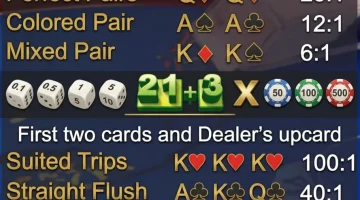
One more thing: don’t fall for “side bets.” They look fun, but the house edge on those is often 10% or higher. That’s just throwing money away.
Putting It All Together — A Practical Approach
So, what does an optimal blackjack session look like? Well, it starts before you sit down. You check the table rules — 3:2 blackjack, dealer stands on soft 17, double after split allowed. You set a bankroll — say, 50 units. You decide on a betting system, maybe a flat bet with a slight progression based on the count.
You play basic strategy like a robot. If you’re counting, you adjust bets smoothly — no sudden jumps. You take breaks. You leave when you’re up 20% or down 30%. You don’t chase. You don’t get emotional.
Honestly, most players can’t do this. It’s boring. It’s disciplined. But it’s the only way to win long-term. The house edge is a slow leak — you can patch it with skill, but you can’t turn it into a faucet.
The Bottom Line on Game Theory and Betting Systems
Game theory gives you the roadmap. Betting systems give you the vehicle. But you’re still the driver. No system can guarantee a win — variance is a beast. What they do is tilt the probabilities in your favor, millimeter by millimeter.
If you want to walk away a winner more often, learn basic strategy cold. Pick a betting system that matches your risk tolerance. And remember: the best bet you can make is the one you don’t — when the count is negative, just sit out. Or leave. The casino will still be there tomorrow.
So, next time you sit at a blackjack table, don’t just play — think. The cards don’t have memory, but you do. Use it.