
Adapting Classic Rummy Rules for Solo or Cooperative Gameplay
Let’s be honest—sometimes you just can’t get the gang together. Or maybe you’re in the mood for a quiet, thoughtful challenge. The classic game of Rummy, with its competitive melding and sly card-picking, is a social staple. But its core mechanics are surprisingly flexible. With a few clever tweaks, you can transform it into a satisfying solo puzzle or a collaborative race against the deck.
Here’s the deal: adapting Rummy isn’t about reinventing the wheel. It’s about shifting the goalposts. Instead of trying to outscore other players, you’re battling the game’s own structure or working with a partner to beat a common goal. The rhythm of drawing, discarding, and forming sets and sequences remains wonderfully intact.
Going Solo: The Art of the One-Player Rummy Challenge
Playing Rummy by yourself turns the game into a kind of tactical solitaire. The opponent? Well, it’s the clock, a target score, or simply the stubborn randomness of the shuffled deck. The core objective shifts from “winning first” to “optimizing your hand.”
Popular Solo Rummy Variations
You can set up a few different types of challenges. Honestly, they’re all about giving yourself a clear win/loss condition.
- The Target Score Challenge: Deal yourself a hand (say, 10 cards). Draw from the stock and try to form all cards into valid melds in the fewest turns possible. Each draw counts as a point—lower is better. Can you “go out” in under 15 draws? 12? It’s a race against your own best time.
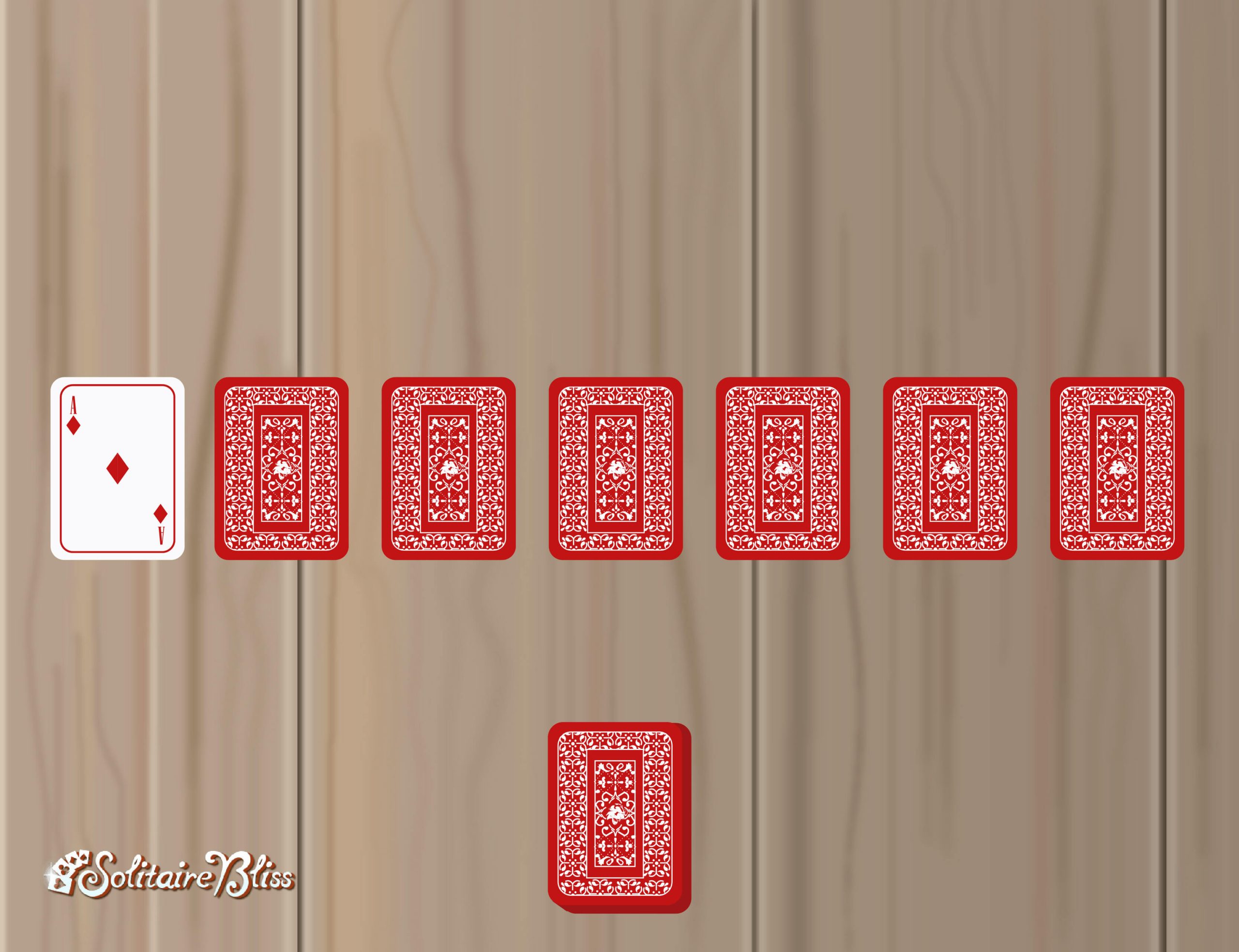
- The “Tableau” Puzzle: Deal out, say, three rows of cards face-up. These form a static “tableau” you can draw from, but with rules. Maybe you can only draw the top card of a column, like in solitaire. Your goal is to build melds from this fixed resource, planning several moves ahead. It’s a spatial brain-teaser.
- The Round Limit Challenge: Shuffle the deck and set a hard limit—like 20 rounds. In each round, draw one card, discard one. At the end of the rounds, tally your score based on the cards left in your hand (face cards high, aces low). The aim is to have the lowest possible deadwood score. It forces aggressive melding.
Key Adjustments for Solo Play
| Classic Rule | Solo Adaptation | Why It Works |
| Multiple players drawing/discarding | A single, face-down stock pile & one discard pile. | Simplifies the “opponent” simulation. The discard pile is your only “memory” of past turns. |
| Going out ends the round | Going out is the win condition, or you play to a turn/score limit. | Creates a clear, self-contained victory. No waiting for others. |
| Knocking (in some versions) | Often removed. The goal is to meld all cards. | Makes the challenge more complete and puzzle-like. |
The beauty here is in the repetition. You start to see patterns, probabilities. It becomes less about luck and more about efficient hand management—a quiet, almost meditative exercise in card logic.
Teaming Up: Cooperative Rummy Gameplay Dynamics
This is where things get really fun. Cooperative Rummy transforms the table from a battlefield into a workshop. You and your partner(s) are on the same side, working against a shared obstacle. The tension shifts from “What are they holding?” to “How can we combine our resources?”
Imagine you’re two chefs sharing one pantry, trying to create the perfect meal before time runs out. That’s the vibe.
How to Structure a Cooperative Rummy Game
The simplest method? You’re playing against a dummy hand or a deck penalty. Here’s a straightforward setup:
- Set a Common Goal: “Meld 5 sets/sequences combined before the deck runs out.” Or, “Finish with a combined deadwood score of less than 10 points.”
- Allow Limited Communication: This is crucial. You can’t just show your hands. Maybe you can only state the number of cards you have in a potential meld (“I’m one card away from a run”), but not the specific cards. It preserves the puzzle.
- Introduce a Shared Discard Pile: You both draw from the same stock and discard to a central pile. But—and here’s the twist—you can sometimes take a discard for your partner if it clearly completes their stated meld. This encourages strategic signaling.
- Create an Adversary: Deal a “phantom” hand face-down. After every two turns your team takes, flip a card from this hand onto its own discard pile. If the phantom hand can form a meld from its visible discards, it scores points against you. It’s a timer with teeth.
The pain point this solves? The frustration of cutthroat play. It’s perfect for partners or parents and kids. You’re problem-solving together, celebrating shared “aha!” moments when a clever discard saves the day.
Balancing the Game: Difficulty & The Fun Factor
Okay, so any adaptation can feel too easy or brutally hard. The key is tuning the dials. For solo play, adjust the hand size or turn limit. Start with 10 cards and 25 turns. Too easy? Try 13 cards and 20 turns. It’s a dance.
For cooperative Rummy, the balance lies in the communication rules. Too restrictive, and you’re just playing parallel solitaire. Too loose, and it’s trivial. Finding that sweet spot where you have to infer your partner’s needs… that’s where the magic happens. You start to develop a kind of silent shorthand, a meta-language of sighs and hopeful discards.
And don’t be afraid to house-rule. Maybe in co-op play, you can perform one “gift” exchange per game, swapping a single card openly. It becomes a powerful, once-per-game resource to be deployed strategically.
The Heart of the Game Remains
Whether you’re hunched over a solo puzzle at the kitchen table or whispering strategies with a teammate, you’re still engaging with the beautiful, fundamental DNA of Rummy. You’re spotting patterns. You’re calculating odds and making sacrifices—discarding a useful card now for a better potential draw later. The core joy of organizing chaos into neat runs and sets is utterly preserved.
In a world that often feels hyper-competitive, there’s a quiet appeal in these adapted forms. They offer a different kind of satisfaction. Not the thrill of victory over another, but the contentment of solving a complex problem, either alone or with a friend. It turns a classic game of cunning into a test of patience, foresight, and collaborative wit. And honestly, that’s a hand worth playing.